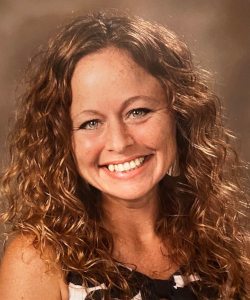
Dr. Amy Baltimore is a former missionary kid who grew up experiencing first-hand what it is like to serve the needs of children with deep developmental trauma. She began her career by leaning into her passion for supporting the positive growth and development of students through school counseling. As time went on, she realized the adults need just as much support as the students. So, she stepped into the role of serving as a district leader for school counseling, currently with Metro Nashville Public Schools.
Her professional experiences also include serving on the Board of Directors for the Tennessee School Counselor Association, and on advisory councils for the Tennessee Department of Education. She has been an adjunct professor and frequent speaker at various higher ed events and state conferences. She is a Nationally Board Certified Counselor and a certified trainer for Restorative Practices, Building Strong Brains (ACEs/PCEs), The 6 Pillars of Trauma-Informed Schools, and Youth Mental Health First Aid.
Amy Baltimore is also the author of 30-Minute Groups: Relationships and Belonging and 15-Minute Focus: Relationships and Belonging.
Amy is happily married and has two amazing children who have grown and flown. She loves any activity involving sunshine and warm weather. On any given sunny day you can find her at the lake on her paddleboard, or on a bicycle riding the greenway, or hiking with her husband toward one of the many waterfalls found in Middle Tennessee.
Students can often appear socially integrated, but instead they feel unseen or unsafe in the learning environment. In that mindset they struggle, and sometimes, refuse to engage in learning.
This workshop introduces practical ways educators can diagnose disconnection, distinguish healthy solitude from harmful isolation, and build school-wide systems of consistent relational experiences that foster a culture of belonging. Participants leave with simple, actionable strategies to help student brains thrive as they anticipate safety, engage in positive relational connections, and develop a readiness to learn.
Creating meaningful connections by understanding how our similarities and differences empower us, and realizing that setting healthy boundaries in relationships promotes mutual respect and understanding, reduces pressure and stress, and increases our confidence and ability to access personal growth.
Your voice matters! As a school counselor you can lean into the ASCA National Model and additional resources to become a strong advocate for each and every student at your local school level, the district level, and even the state level.
What do school counselors need to get their programs off the ground – administrators! What do administrators need to fill the gaps for student support – school counselors! The two go hand in hand. Through the strategic use of data to close gaps in student outcomes, collaboration between the school counselor and school administrator yields improved results for student academic achievement, attendance, and social behavior.
If there is one constant in education today, it is “change.” Change is inevitable and we can’t seem to escape it; so how do we lean into it and do more than just survive the onslaught? Here we will lay it all out on the table and openly discuss the crises and conflicts we encounter when change occurs, then we will grapple with some ways to engage with the change and come out the other side thriving in our work as educators.
Half of our students don’t want us to tell them what to do, and the other half want us to tell them exactly what to do so they don’t have to come up with solutions themselves. Motivational Interviewing (MI) offers a practical middle path by empowering students to uncover their own motivations, strengths, and next steps.
In this session, you will learn core MI techniques that foster student ownership, deepen critical thinking, and reduce resistance. Participants will leave with strategies they can immediately integrate into conversations to guide students toward meaningful, self-driven change.
Refine and elevate student-support practices by enhancing Solution-Focused Brief Therapy with the integration of complementary therapeutic strategies such as Motivational Interviewing, Cognitive Behavioral Therapy techniques, Person-Centered counseling approaches, and Reality Therapy goal-oriented guidance.
Through interactive exercises and real-world scenarios, you will learn how to integrate these approaches in a seamless, flexible way and explore how each method uniquely empowers students to identify their own resources, envision goals, and take actionable steps toward success. By the end of the workshop, you will leave with a polished set of tools to inspire hope and encourage your students to take ownership of their personal growth.