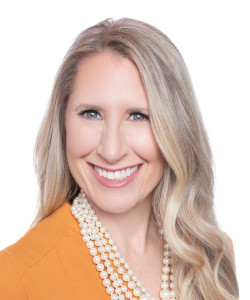
Dr. Emily Goodman-Scott is a Professor in Counselor Education and the School Counseling Coordinator at Old Dominion University in Virginia. A former school counselor and special education teacher as well as a Licensed Professional Counselor, Dr. Goodman-Scott has worked in education for more than 20 years. She works with school districts, schools, and associations across the U.S. and internationally, providing training, coaching, workshops, and keynotes.
Dr. Goodman-Scott is a nationally recognized expert in school counseling and multitiered systems of support (MTSS), with particular expertise in systems change, leadership, advocacy, prevention, and Tier 1 school culture and classroom practices. Her work focuses on helping school counselors move beyond reacting to individual student needs to proactively creating school systems where all students can thrive and belong. She also publishes and presents extensively on disability and neurodiversity, with a focus on creating neurodiversity-affirming, equitable, and just schools.
Dr. Goodman-Scott brings extensive professional leadership experience, including service on the American Counseling Association Board of Directors and more than 15 years of leadership with the Virginia School Counselor Association, including serving as Chair of the Board from 2019–2020.
She is the lead editor of A School Counselor’s Guide to MTSS and Making MTSS Work, published by the American School Counselor Association, as well as two books with anticipated publication in early 2027: Neurodiversity-Affirming School Counseling with Routledge and Critical Theories for Counselor Education. She has also co-authored the I Can series of children’s social stories.
Across her presentations and trainings, Dr. Goodman-Scott bridges research with practical school implementation, giving participants concrete tools they can use immediately while helping them think differently about the systems surrounding students.
Follow Dr. Goodman-Scott on LinkedIn and through School Counselors for MTSS on social media.
High caseloads. The youth mental health crisis. Chronic student absenteeism. Educator burnout. As school counselors, we have more tasks than time. What can we do?
In this session, Dr. Goodman-Scott draws from her research and experiences working with schools and districts across the country to explore how school counselors can use MTSS to expand their impact and help lead systems change. Participants will examine strategies for creating a strong Tier 1 for all students, supporting students with more intensive needs through Tiers 2 and 3, and using data to identify needs and expand impact.
This practical session provides concrete tools and ideas for working smarter—not harder—while building and sustaining school counseling programs and schoolwide systems that serve each and every student.
This topic can be adapted for a keynote, breakout session, half-day workshop, full-day institute, or district professional development.
Everywhere we turn, we hear the term “neurodiversity.” But what does neurodiversity-affirming practice actually look like in K–12 schools—and what can school counselors do to help lead this change?
Grounded in Dr. Goodman-Scott’s research and ongoing work with school districts, this session moves beyond simply understanding neurodiversity to putting neurodiversity-affirming principles into practice. Participants will explore ways school expectations and systems can create barriers for neurodivergent students and consider how school counselors can help create environments that center students’ strengths, support needs, cultures, and sense of belonging.
Dr. Goodman-Scott shares tools and strategies that can be implemented across the school as well as practical resources for directly serving neurodivergent students. Participants will leave with concrete strategies for systems-level advocacy and direct school counseling practice while centering student and family voice.
Let’s work together to reimagine schools where students do not have to fit into the mold of “typical” in order to belong.
This topic can be adapted for a keynote, breakout session, half-day workshop, full-day institute, or district professional development.
We screen students for academics, vision, and hearing—but what about mental health and social/emotional needs?
Universal mental health screening, the systematic screening of every student using identified criteria, is increasingly being implemented in schools across the country, often as part of MTSS. Rather than waiting until students reach a crisis point, universal screening can help schools use data to proactively identify needs and connect students with appropriate supports.
Come learn about universal mental health screening, including how to get started, commonly used assessments, and important implementation considerations. Hear examples of how schools are approaching screening and consider how screening data can inform Tier 1, Tier 2, and Tier 3 supports. Participants will leave with practical resources and a plan for next steps.
Are you overwhelmed with high caseloads? Constantly putting out professional fires? Taxed with too many responsibilities? Who has time for prevention?
The better question may be: How can we afford not to focus on prevention?
Bullying prevention, substance-use prevention, dropout prevention, mental health promotion—what do they have in common, and where do school counselors begin? In this practical session, participants will explore key principles of prevention and the school counselor’s role in creating strong Tier 1 systems that reach all students.
Participants will leave with strategies for moving from primarily reactive services toward a more proactive school counseling program that strengthens school culture, promotes student well-being, and reduces the need to continually put out fires.
School counselors see things others may not. We see patterns across students, classrooms, families, data, and school systems. But how do we move from recognizing a problem to actually changing the conditions contributing to it?
This session explores the school counselor’s role as a leader, advocate, collaborator, and systems-change agent. Participants will consider how data, student and family voice, collaboration, advocacy, and MTSS can help identify barriers and guide meaningful change.
Through practical examples and interactive activities, participants will examine their own school systems and identify opportunities to expand their impact beyond individual student services. Participants will leave with concrete strategies for moving from identifying problems to leading collaborative, sustainable change that improves access, belonging, and outcomes for students.
This topic can be adapted for a keynote, breakout session, workshop, or district professional development.
Teachers are trained in classroom management strategies—but what about school counselors?
Dr. Goodman-Scott shares evidence-based classroom management strategies recommended by the U.S. Department of Education and aligned with the ASCA National Model, specifically adapted for school counselors delivering classroom instruction.
Come to this interactive, practical session to revolutionize your classroom management and gain tools you can implement immediately, including the classroom management checklist. Hear how other school counselors have used these strategies in their own school counseling programs and leave ready to strengthen your classroom lessons and Tier 1 practice.
School counselors typically learn the foundations of solution-focused counseling and motivational interviewing in graduate school. But what happens when we move beyond the basics?
In this interactive session, participants will explore advanced solution-focused and motivational interviewing techniques they can use immediately with students. Come ready for demonstrations, videos, role plays, practice—and some solution-focused, motivational fun!
Participants will leave with concrete counseling strategies they can begin using right away.
Social stories are a data-driven, evidence-based practice that can be used with a variety of students and across many needs, ranging from autism to anxiety—but how do you create an effective one?
Come to this interactive session to learn five quick steps for developing and implementing social stories. Participants will walk through the process, examine practical examples, and leave with tools they can use to create individualized social stories for students.
You’ll leave this session with practical resources you can use tomorrow.
“This was the best session I went to at this conference. I could have gone to a whole day training. Thank you for the work you do on MTSS. I can’t wait to read your book!”
“Awesome information! Worth every minute!”
“Excellent presentation. Thank you for allowing us to dialogue with each other and hear what others are doing in their school.”
“Dr. Goodman-Scott is an excellent presenter who takes time to listen while she is presenting. She also shows respect for her audience through listening to their concerns. She explains well and we appreciate her coming to speak to school counselors today.”
“Down to earth and ‘useable’ info.”